
When the house was built, the second story floor was badly under-supported, resulting in an unpleasant “swim” effect when walking across the bedrooms upstairs.

In an ideal world, the upstairs would have been completely torn out and remodeled like the downstairs, floor to ceiling. (Actually, in an ideal world, the house wouldn’t have needed any of this in the first place because it would have been built correctly originally. But I digress.)
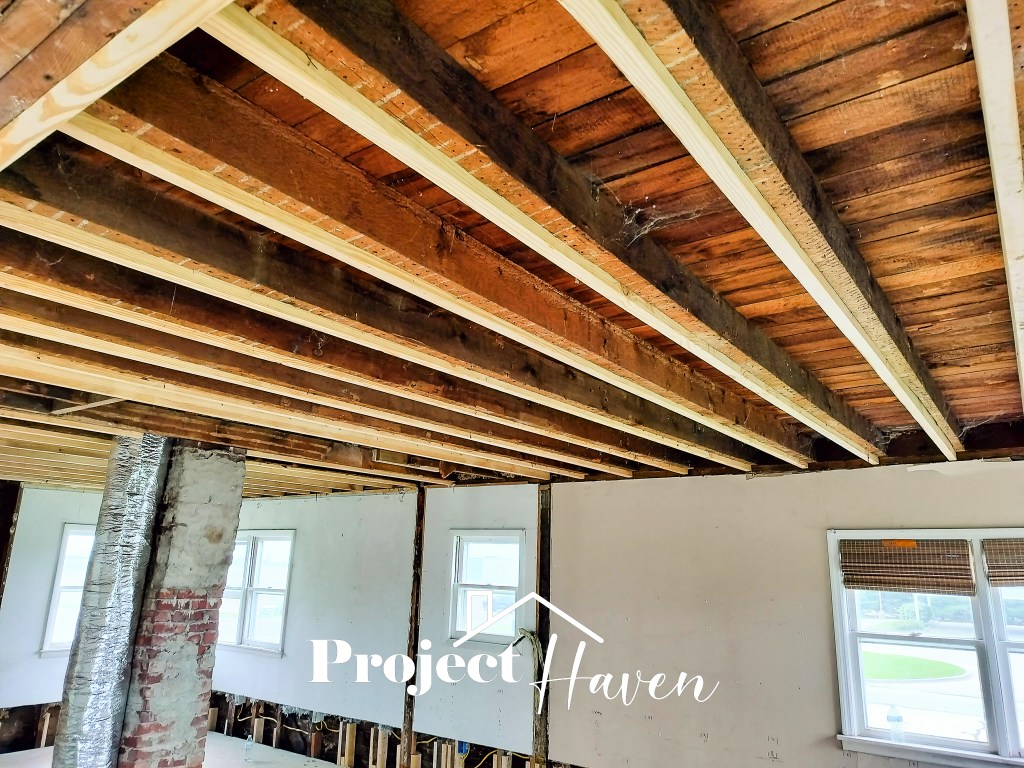
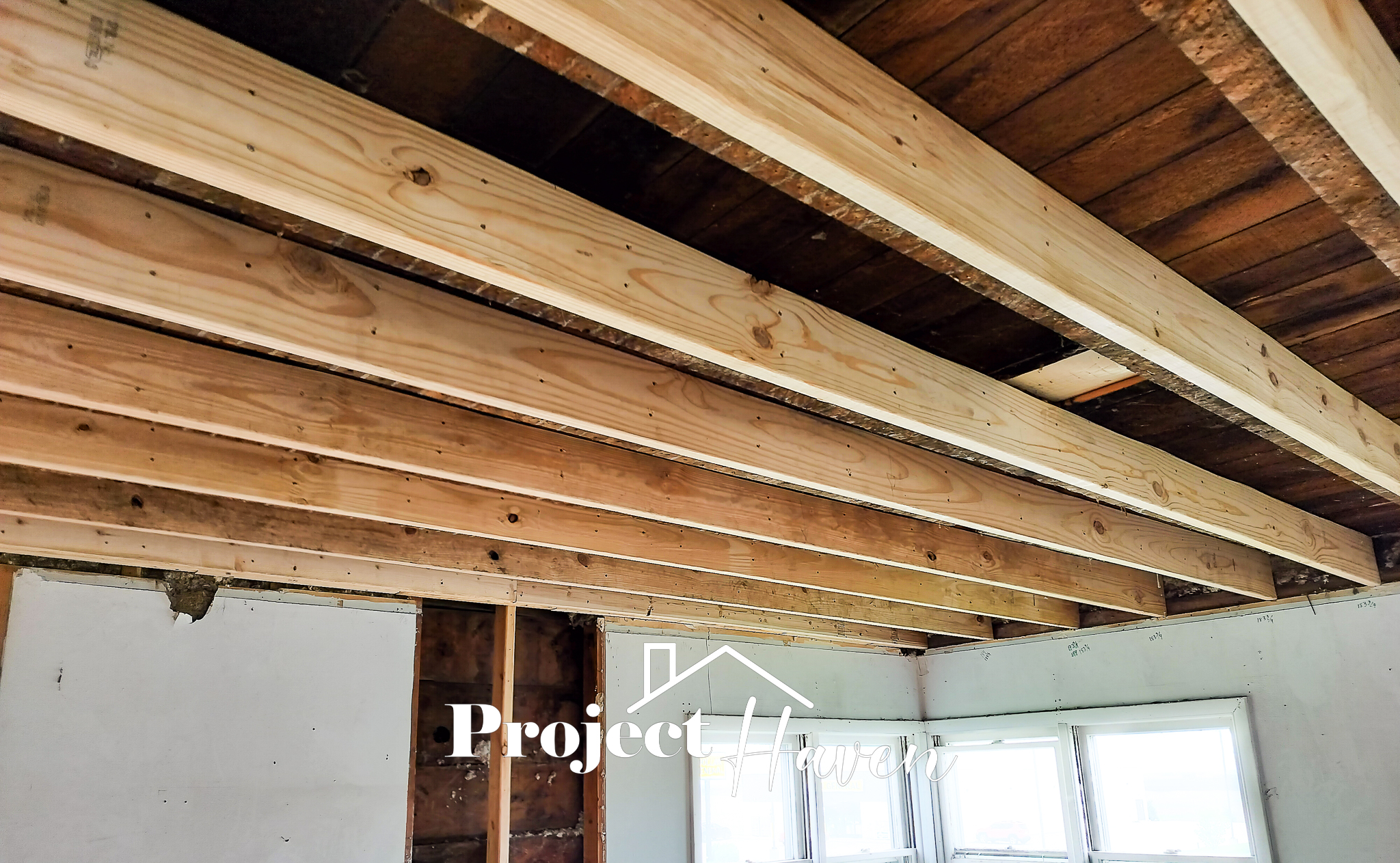
Alas, the ideal world is not ours, so Matt used a technique called sistering. He nailed a full-span 2×8 to each original 2×6, creating the effect of a thicker, stronger board or beam. Engineer brother-in-law approvingly mentioned something technical about deflection and beam diameter. What we took away in non-technical language is that two joists sistered together (essentially making one bigger beam) have WAY more stiffness/strength than 2 joists right next to each other but that are not joined together by sistering.
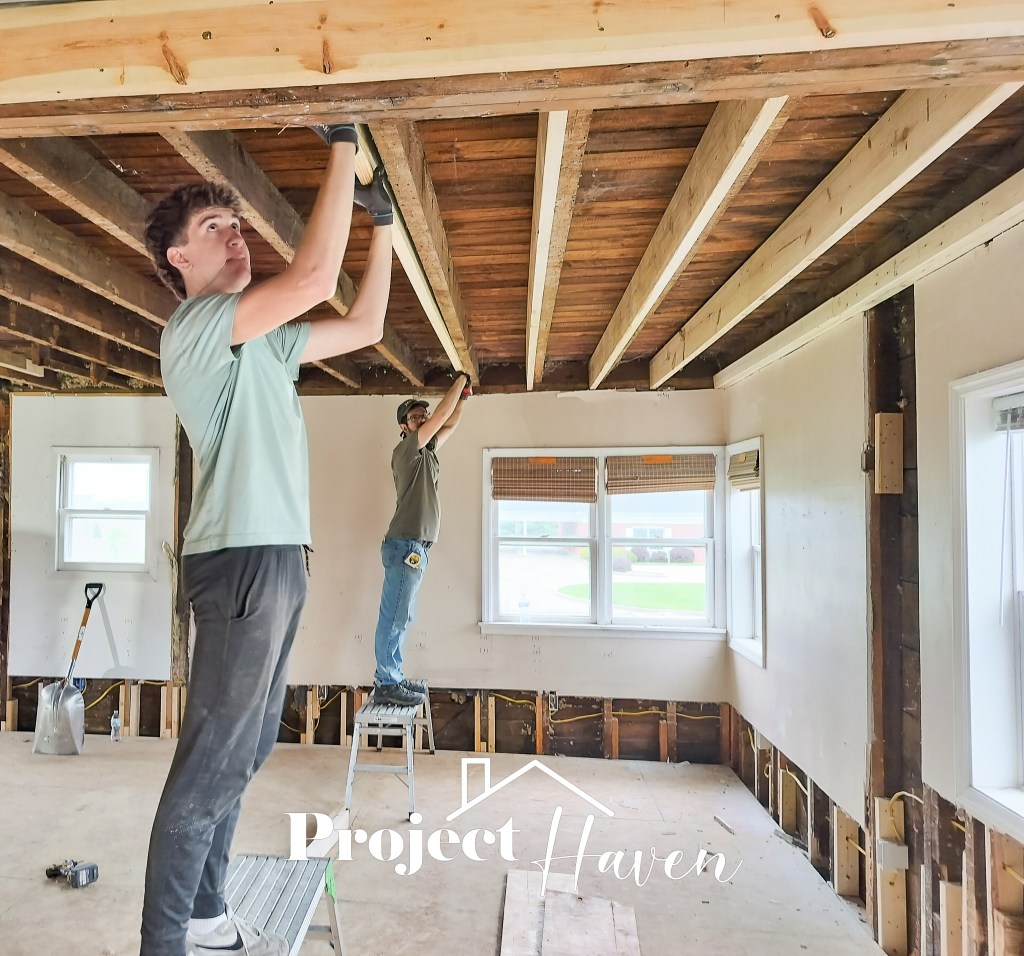
The guys had to lift each 15-foot board into place, scribe the curve of the sag in the floor (from 100+ years of inadequate support), bring the board back down, trim off the curve, and fit the board back up to the ceiling before securing in place.

Their arms were jellified after all that lifting and holding–Matt and his brother-in-law would not have been able to finish it in one day without the two teen nephews. Thankfully, despite the exhaustion and very heavy boards, there was only one minor accident.
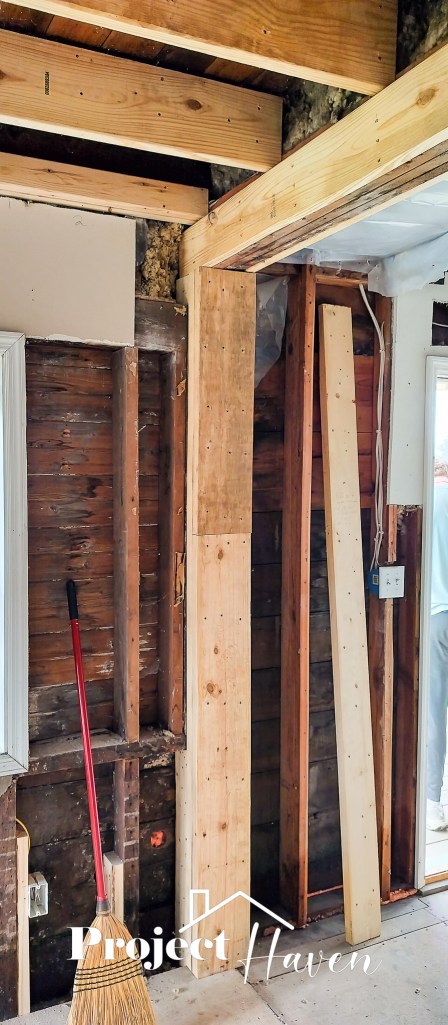
At the end of the day, Matt had to decide what to do with a load bearing vertical column on the north wall. It was in pretty bad shape on the inside, but tearing it out and replacing it had some logistical challenges. Building the beam out on the front and sides was a good solution to restore strength and function. This is the final product, waiting for drywall encasement.
Recap–before, and after:
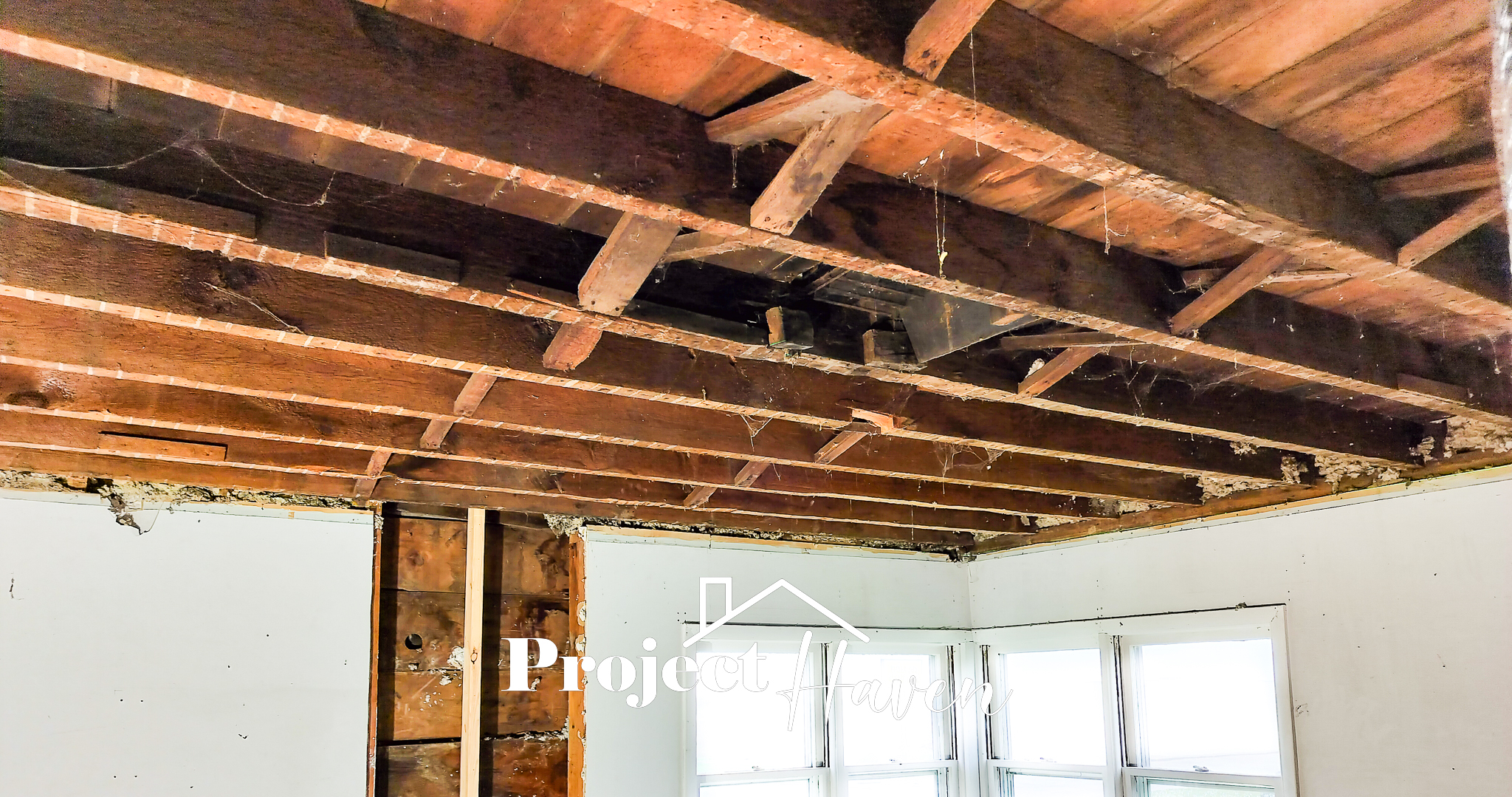
Such a difference, don’t you think?
 Project Haven